The most affordable way to fly
Hourly rates typically run a third of turbine training and around half of heavier piston types. That keeps PPL(H) syllabi attainable and lets students build real hours rather than rationed ones.

The world's most popular training helicopter. Where legends begin their journey.
Frank Robinson drew the R22 in 1973 with a single objective: make personal helicopter flight affordable without compromising integrity. He had left Hughes and Bell in pursuit of a light two-seater that private pilots could actually own and instructors could actually teach on, a gap the industry had failed to close in thirty years.
The first flight in 1975 proved the design; production began in 1979. Four decades later, more than 4,800 airframes have been delivered and the R22 remains the default first helicopter for the majority of rotary pilots worldwide. Every Beta II rolling off the Torrance line today is the direct descendant of that original prototype.
The reason the design has endured is not nostalgia. It is that the R22's combination of low inertia, direct controls and honest handling creates pilots who understand rotorcraft at a mechanical level, and that understanding transfers to every aircraft they fly afterwards.


The benchmark piston trainer.

The R22's demanding nature develops exceptional pilot skills. Those who master the R22 find themselves exceptionally prepared for any helicopter they fly thereafter.
The R22's two-blade, semi-rigid rotor system stores minimal energy, requiring pilots to maintain precise RPM management. This characteristic develops exceptional awareness of energy state and rotor dynamics.
Controls are operated directly by push rods with no hydraulic assistance, providing pilots with pure, unfiltered feedback. This direct connection between pilot input and rotor response creates an exceptional training environment that develops superior skills.
The demanding nature of the R22 creates pilots with exceptional hand-eye coordination and situational awareness. Those who master the R22 transition seamlessly to larger, more complex helicopters.
Hourly rates typically run a third of turbine training and around half of heavier piston types. That keeps PPL(H) syllabi attainable and lets students build real hours rather than rationed ones.
Direct push-rod controls with no hydraulic assistance mean every input is felt. Pilots trained on the R22 read rotor state instinctively, a habit that carries over to every heavier type they fly afterwards.
EASA, CAA and FAA syllabi are built around the R22. Instructor ratings, type-specific Awareness Training (SFAR 73 / UK equivalent) and examiner standards all assume it.
Four variants, one airframe. Compare the Alpha, Beta, Beta II and Mariner to land on the R22 that fits your mission. Then talk to HQ Aviation about sourcing one.
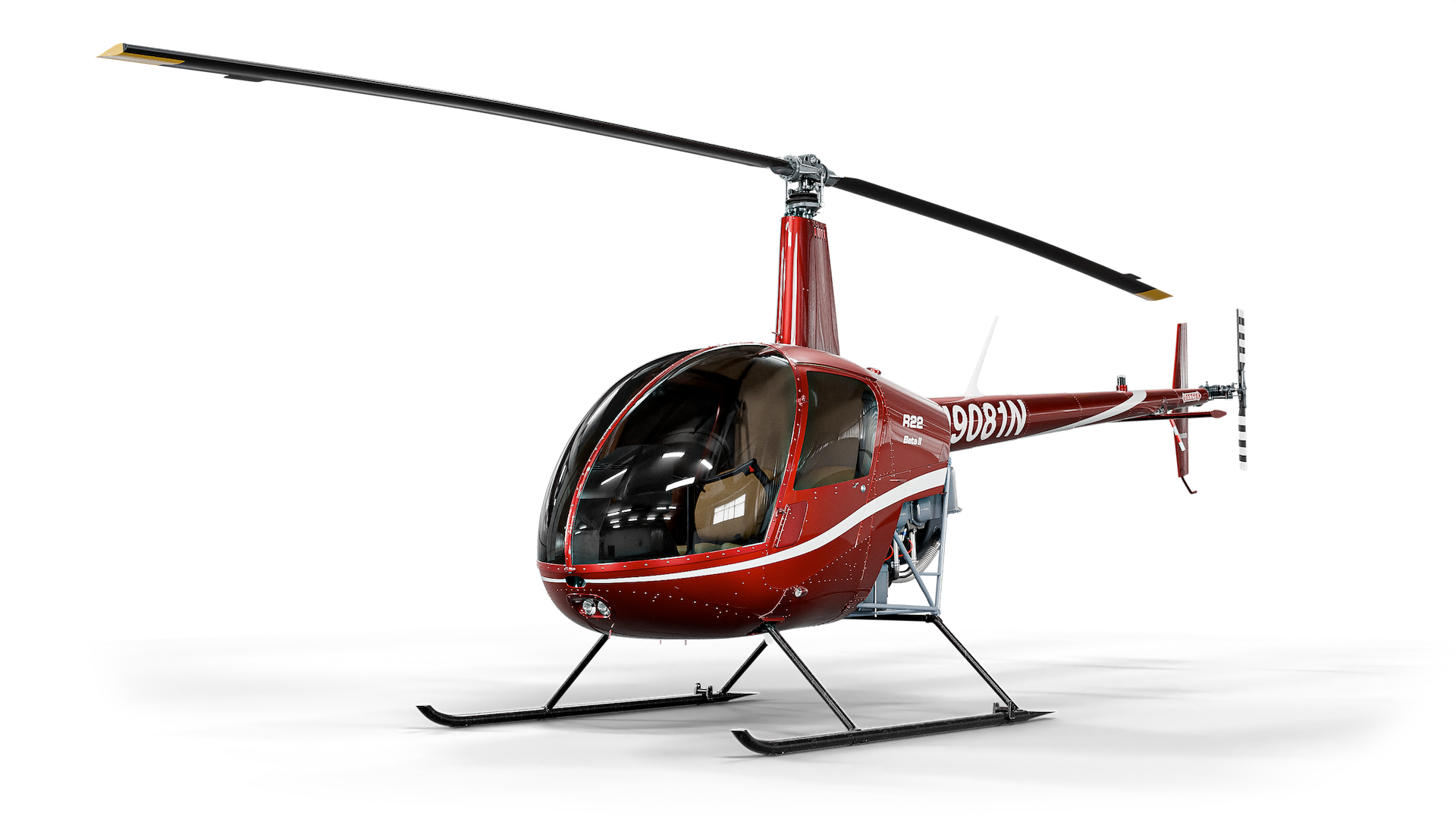
| Specification | Beta IICurrent |
|---|---|
| Introduced | 1995–present |
| Engine | Lycoming O-360-J2A, 145 HP (derated) |
| Fuel System | Carbureted |
| Power | 131 HP take-off / 124 HP continuous |
| Max Gross Weight | 1,370 lb |
| Useful Load | 490 lb |
| Range | 250 nm |
| Landing Gear | Skids |
| Best For | 2,200-hour TBO; Robinson Safety Course |

Frank D. Robinson begins designing the R22, pursuing his vision of an affordable, reliable light helicopter for the private market.
The R22 prototype takes to the skies, demonstrating the viability of Robinson's revolutionary design approach.
Robinson Helicopter Company begins production of the R22, launching the most successful light helicopter program in history.
The improved R22 Beta II model launches with enhanced performance and safety features.
Fatal accident rate drops to 0.7 per 100,000 flight hours, down from 6.0 in 1982, following implementation of the Robinson Pilot Safety Course.
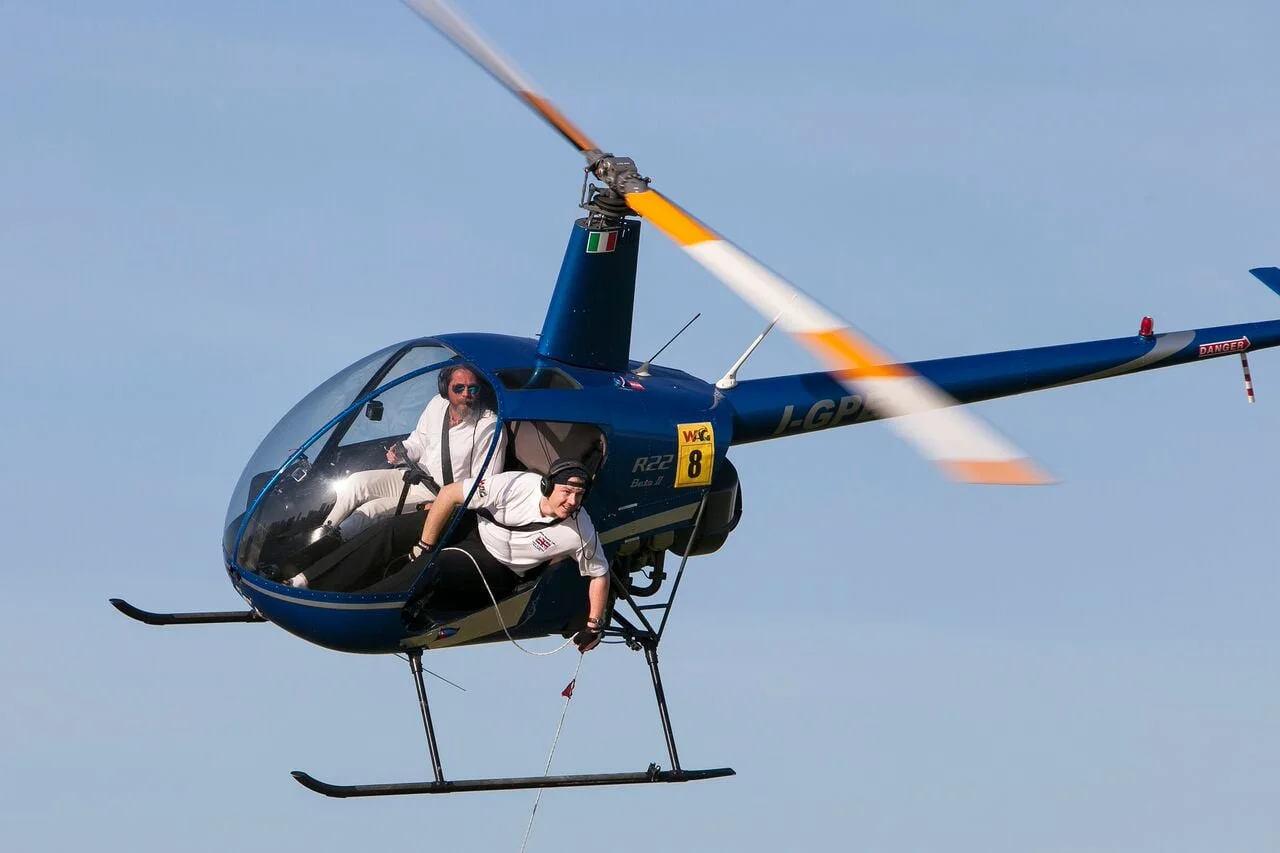
Captain Quentin Smith wins the World Helicopter Aerobatic Championship in Russia flying the R22, the only piston trainer ever to take the title, and the defining moment that confirmed the aircraft's handling pedigree beyond the training arena.
Over 4,800 R22 helicopters delivered worldwide, making it the most popular training helicopter ever produced.
In 2012, Captain Quentin Smith took an R22 to Russia and won the World Helicopter Aerobatic Championship, the only piston trainer ever to claim the title, in a field otherwise contested by purpose-built turbine types. It was not a quiet win. It was a direct statement about what the R22 is capable of when flown by someone who understands it completely.
Captain Q's flying predates the championship by decades. He is the first pilot to have circumnavigated the globe pole-to-pole by helicopter, a feat that required every skill the R22 teaches and none of the systems that modern types provide. HQ Aviation's instruction ethos, that a pilot trained properly on the R22 can fly anything, comes directly from this lineage.
Every student who trains with us at Denham trains in the aircraft that a world champion chose to prove his point.


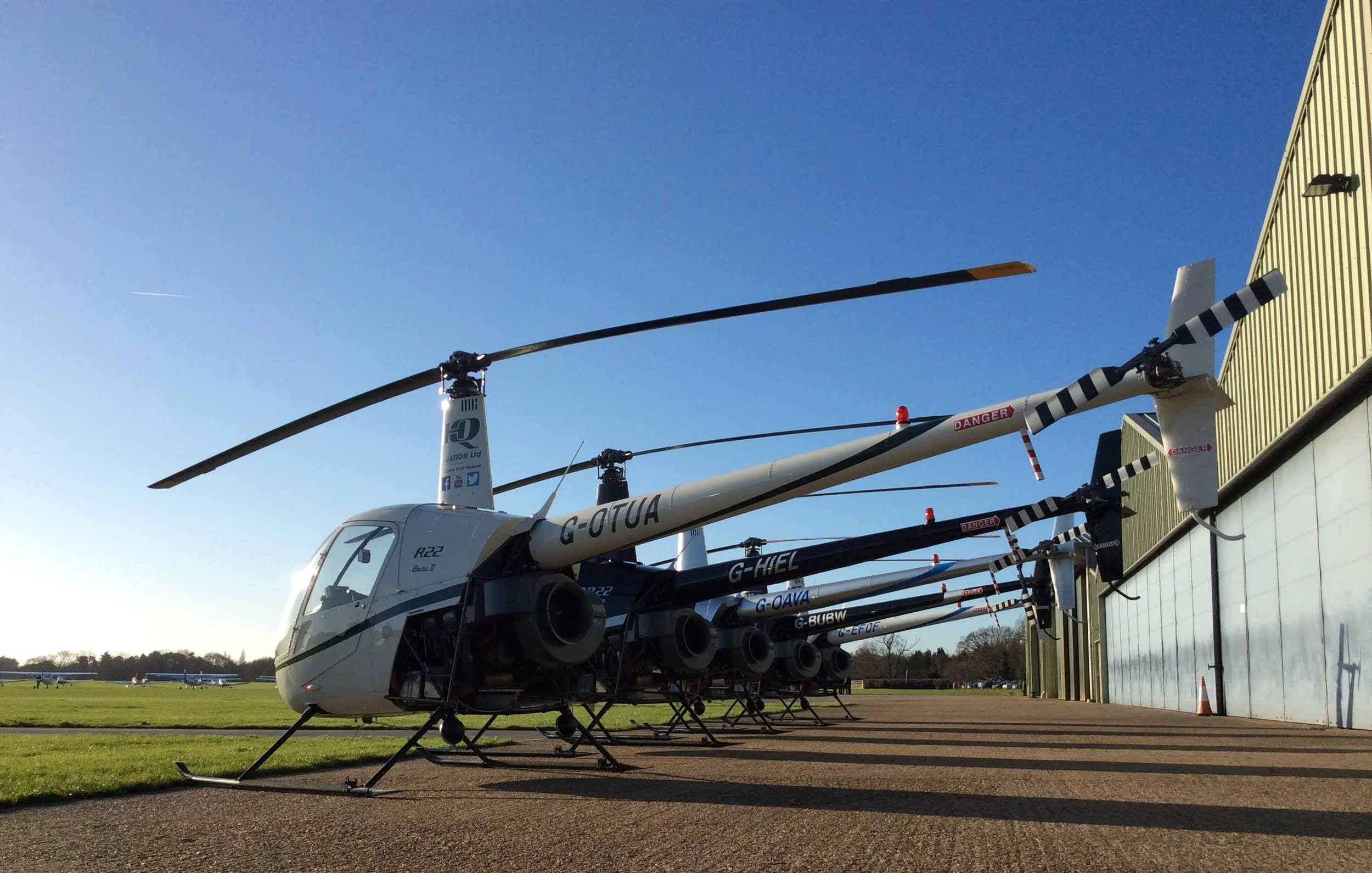
HQ Aviation sells the Robinson R22 both ways: factory-new Beta II trainers built to your specification, and pre-owned examples inspected in our CAA Part-145 workshop before sale. We are a Robinson Authorised Dealer and Service Centre at Denham Aerodrome, 30 minutes from central London, and because the R22 is the classic training helicopter, many buyers earn their PPL(H) with us on the same type they own.
Robinson’s indicative factory list price for the R22 Beta II is around $375,000 before options and VAT, the most affordable new helicopter in the Robinson range. Live pound pricing is on our helicopter sales page.
It’s the classic one: the world’s most popular training helicopter, with direct push-rod controls whose feedback transfers to heavier types. Most UK pilots earn their PPL(H) on the R22, and many at Denham buy the aircraft they train in.
Every R22 reaches a mandatory overhaul at 2,200 flight hours or 12 calendar years, whichever comes first. Remaining life on that clock drives a used R22’s value more than anything else.
Two, side by side: pilot and one passenger or instructor. If you regularly need more seats, the four-seat R44 is the step up.
Yes. Our CAA Part-145 workshop at Denham Aerodrome services the whole Robinson range, from 50-hour checks to the full 2,200-hour/12-year overhaul.
Tell us what you'd like to do. We'll route your enquiry to the right person at HQ.
Explore training →